
By Praise Asaasira
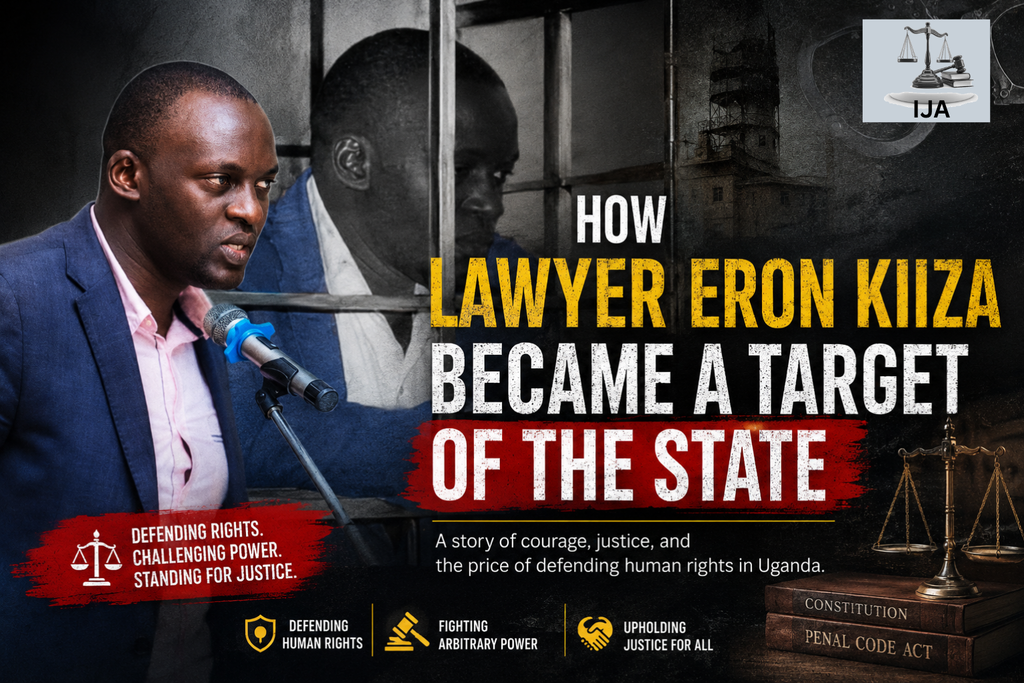
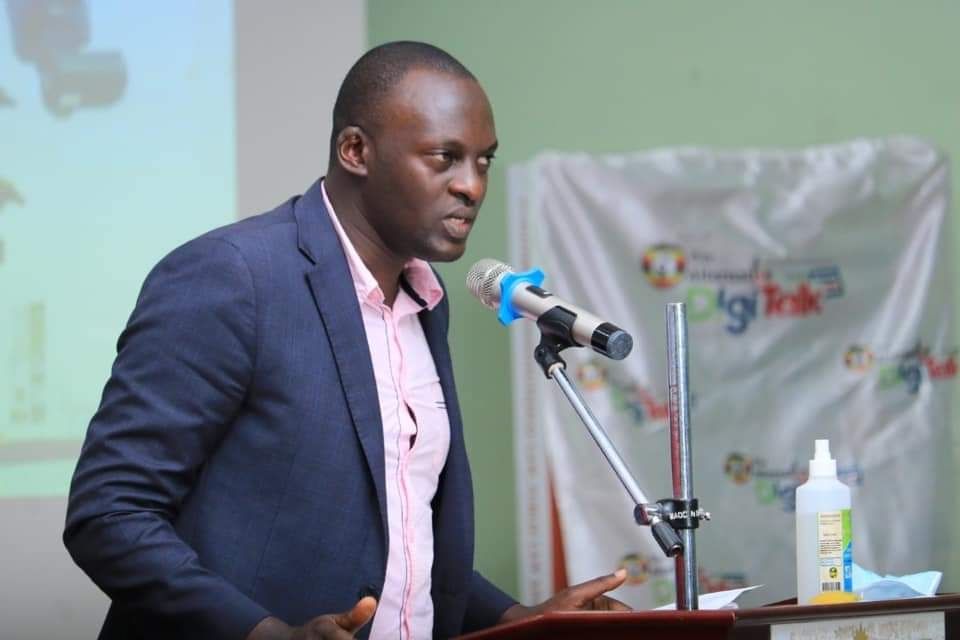
Eron Kiiza has practised law for close to two decades, particularly public-interest litigation involving human rights and their close cousin, environmental rights. He has been at the forefront of several cases defending public figures, including the exiled lawyer, novelist and playwright Kakwenza Rukirabashaija and opposition leader Dr Kizza Besigye, while also taking on numerous public-interest cases concerning environmental protection. This kind of legal practice is ordinarily called public-interest lawyering. In Uganda, if pursued with sufficient seriousness, it can eventually become evidence against the lawyer.

In April 2020, during the total Covid lockdown, Kakwenza Rukirabashaija was kidnapped about a month after publishing his debut novel, The Greedy Barbarian, a book that shook the state and sold out twice. He was taken to the Chieftaincy of Military Intelligence at Mbuya, tortured, and later smuggled before a court in Iganga District without his lawyer, before being remanded to the remote and overcrowded Busesa Prison in Bugweri District. The entire country was under lockdown. Public and private transport had been suspended, with limited exceptions including agricultural activity. Eron therefore devised a solution that probably appears nowhere in the Law Development Centre curriculum. He obtained a double-cabin Hilux, loaded it with mulch and a few sacks of agricultural waste, and set off looking sufficiently like a farmer to reach his client in prison. Beneath the mulch was a lawyer carrying the Constitution and Penal Code Act. He fought for Kakwenza’s rights until the case was eventually dismissed for want of prosecution.
In September of the same year, Kakwenza published a prison memoir, Banana Republic: Where Writing Is Treasonous, narrating the torture he had suffered in April. CMI operatives picked him up again and took him back to Mbuya Hill, where he was tortured again. Eron was again there as his lawyer. By then, he was acquiring the troublesome habit of appearing wherever the state would have preferred its captive to have nobody asking legal questions.
In December 2021, seventeen armed men broke into Kakwenza’s home with sledgehammers and took him away. He was detained by the Special Forces Command, tortured, his legs were broken and his entire body mutilated. Eron defended his rights both publicly and in court and remained with him until he fled into exile in February 2022. Even exile did not terminate the legal work. Eron continued representing him and demanding the return of his confiscated passport.
When Kizza Besigye and Obeid Lutale were kidnapped in Kenya and brought back to Uganda for trial before a military court, Eron was again there to defend them. He found himself having to teach law and procedure to the non-lawyers presiding over the kangaroo court, which understandably discombobulated them. There are few things more irritating to people exercising arbitrary power than a lawyer arriving with the irritating suggestion that there are rules. The military court eventually held Eron in contempt and sent him to prison without giving him a proper hearing. Thus, the lawyer who had walked into court to defend prisoners became a prisoner himself.
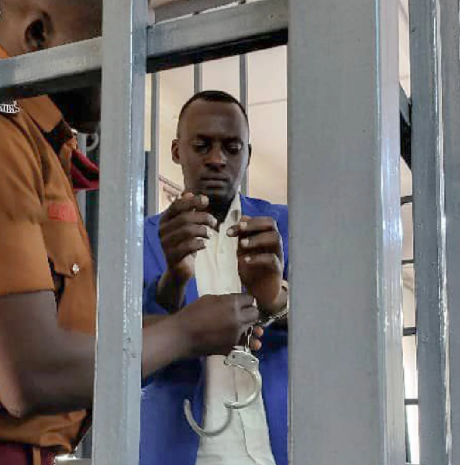
Eron spent months in prison before successfully challenging the process in the civilian courts. When he came out, he did not emerge rehabilitated into obedience, which must have disappointed those who had imprisoned him. He simply resumed from where they had interrupted him. He joined the glitterati of lawyers representing Besigye and Lutale before the High Court and continued doing exactly the legal work for which prison had apparently been prescribed as corrective medicine.
Eventually, Eron received information that members of Besigye’s defence team were themselves being targeted for arrest, while Martha Karua, the lead counsel, faced hostility from the Ugandan authorities. Eron fled into exile before they could get hold of him. Erias Lukwago was not as fortunate. He was taken into custody, and Muhoozi Kainerugaba posted photographs of him on Twitter while boasting about his detention and saying that he was being taught Kiswahili. Lukwago is now in Luzira Prison, having repeatedly been denied bail, while concerns remain about his illness and need for medical attention, much like Kizza Besigye himself.
This is how Eron Kiiza became a small stone inside the shoes of Museveni and Muhoozi. He did not command an army. He did not possess a gun. His irritating weapon was the law, and he had developed the unfortunate professional habit of insisting that it should apply even when the government found its application inconvenient. If he had not fled into exile, there is every reason to fear that he might now be in prison alongside Erias Lukwago and their clients, Besigye and Lutale.
The pattern should trouble anybody who still believes that a criminal trial is supposed to determine guilt rather than manufacture it. A state that harasses the lawyers representing an accused person in order to weaken his defence is no longer merely persecuting the accused. It is attacking the right to a fair hearing. Frighten the lawyers, imprison one, drive another into exile, obstruct the lead counsel, and eventually the accused remains standing before the state with nobody sufficiently fearless to challenge what is being done to him. The government can then solemnly announce that he has received his day in court.
Besigye’s crime has essentially been his refusal to bend before Yoweri Museveni’s impunity and his insistence that the government honour the social contract and respect the dignity of the ordinary Ugandan. Eron’s trouble has been insisting that even such a man, hated by the government and inconvenient to those who wield power, remains entitled to the full protection of the law.
That is why Eron’s story is larger than one lawyer. Once representing an accused person becomes sufficient reason for the state to imprison, intimidate or exile his advocate, the courtroom ceases to be the place where state power is restrained by law. It becomes another instrument of that power. At that point, it is not only the prisoner whose liberty is in danger. The legal profession itself has been placed in the dock, and a state that must first terrorise the defence before it can successfully prosecute the accused has already confessed something important about the quality of its case.
Praise Asaasira is an intern at the Institute for Justice and Accountability.
 0
 20